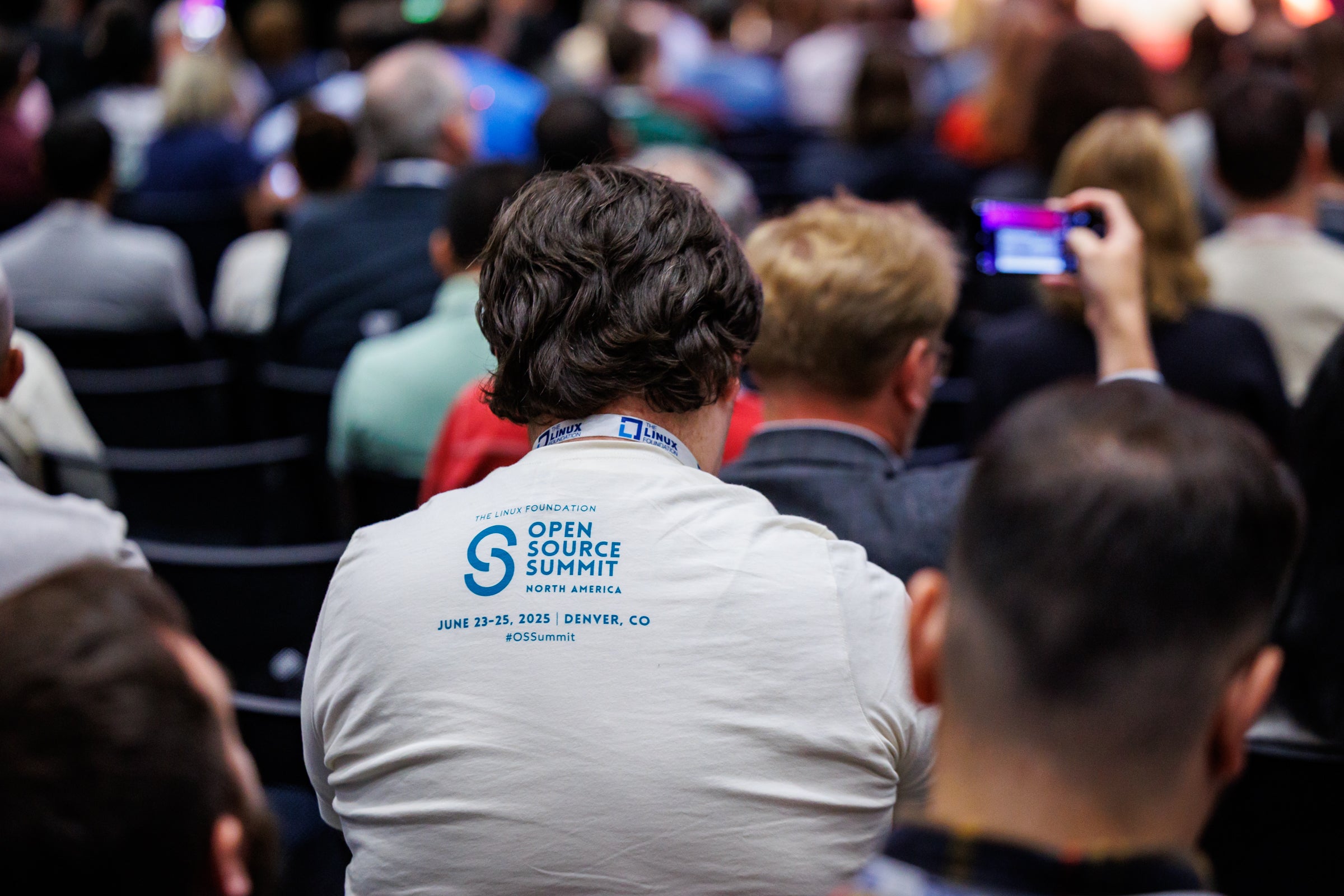
The Open Source Summit North America took place from June 23-25, 2024, in Denver, Colorado, and brought together a dynamic and diverse open source community. With 1,535 in-person attendees representing 732 organizations, the summit reflected the growing momentum and collaboration across the ecosystem.
The audience featured professionals from across the open source spectrum, including embedded and systems developers, security experts, DevOps engineers, and product managers. North America made up 81% of the attendees, with the USA, Canada, and the UK among the most represented countries.
The event featured:
- 263 conference talks
- 1,243 total talk submissions
- 51 sponsors showcasing technologies and tools from across the open source landscape
The Zephyr Project had a strong presence at the summit with multiple talks highlighting real-world applications, technical innovations, and community collaboration efforts.
Across the coming weeks, we will be publishing highlights from each Zephyr-related session, looking into topics such as security, long-term support, tooling, and the integration of Rust into Zephyr-based development.
Stay tuned as we recap the key takeaways and discussions that are shaping the future of Zephyr RTOS.
At the Open Source Summit North America, Sandeep Gundlupet Raju (AMD) presented a technical session on building the Zephyr RTOS for the MicroBlaze-V (RISC-V) FPGA platform using the Yocto Project. The talk highlighted how Yocto’s multiconfig feature enables developers to build heterogeneous systems Linux, Zephyr, and bare-metal applications within a unified build environment.
Raju introduced the MicroBlaze-V architecture, its integration in AMD’s Vivado tools, and its RISC-V ISA compatibility. He then detailed the role of the System DeviceTree (SDT) and the open source lopper tool in transforming hardware descriptions into Zephyr-specific artifacts such as Kconfig, DTS, and multiconfig files. These artifacts feed directly into Yocto’s build system, enabling automated packaging of the Zephyr kernel, drivers, and applications.
The session further explained the structure of the meta-zephyr and meta-amd-zephyr layers, differences from standalone Zephyr builds, and the process of generating Yocto configuration files through both manual and automated SDT transformations. Practical examples covered setting up multiconfig builds, creating recipes for Zephyr applications, and deploying them onto FPGA hardware.
Sandeep concluded with a discussion of current limitations such as upstreaming gaps for Zephyr LTS 3.7 and board extension support and shared the roadmap for improving Yocto integration, automation, and broader community adoption. Slides here.
IREE: An AI Subsystem for Zephyr? – Peter Kourzanov & Anmol Anmol, IMEC
In this session, Peter Kourzanov and Anmol Anmol (IMEC) explored their ongoing research on integrating the IREE (Intermediate Representation Execution Environment) AI framework with the Zephyr RTOS to enable energy-efficient machine learning on edge and embedded systems. The talk envisioned a future where lightweight control software, running on power-efficient hardware, orchestrates a distributed network of heterogeneous accelerators to support scalable, sustainable AI workloads.
The speakers discussed their work on porting IREE to Zephyr’s POSIX layer, enabling inference workloads to run efficiently on RISC-V–based systems. Leveraging Gem5 simulation and FPGA emulation, they evaluated accelerator microarchitectures and tuned performance while maintaining cross-platform reproducibility. They detailed the creation of custom Zephyr BSPs, driver integration, filesystem modifications, and a reproducible build system powered by GNU Guix.
The team successfully demonstrated running models like MNIST, MobileNet, PoseNet, and even GPT-2 on Zephyr-powered hardware accelerators. By combining Zephyr’s lightweight, configurable kernel with IREE’s modular AI execution model, IMEC aims to make Zephyr a viable foundation for AI inference subsystems at the edge.
The session concluded with a roadmap toward distributed training, open source collaboration, and expanding Zephyr’s role in next-generation energy-efficient AI ecosystems. Slides here.
Simulating Embedded Systems With Zephyr – Mohammed Billoo, MAB Labs Embedded Solutions
In this session, Mohammed Billoo (MAB Labs Embedded Solutions) explored how developers can simulate and test embedded systems using Zephyr RTOS before hardware becomes available. Traditional MCU-based development often delays software validation until physical boards arrive, creating integration risks and project delays. Mohammed demonstrated how Zephyr’s ecosystem, combined with modern simulation frameworks, enables engineers to design, test, and validate embedded applications early in the development cycle.
The talk highlighted tools like:
- QEMU – for system-level emulation across multiple architectures
- BabbleSim – for accurate RF and multi-node network simulations
- Renode – a modern, flexible framework for full-system and multi-device emulation
Mohammed also showcased Ztest and Twister, Zephyr’s native testing frameworks, to demonstrate how unit and integration tests can be automated across simulated environments and target hardware. He illustrated workflows that decouple business logic from hardware dependencies, accelerate development timelines, and improve software quality.
The session emphasized adopting modern testing strategies, leveraging Zephyr’s built-in infrastructure, and using open-source simulation tools to reduce risk and enable rapid, hardware-independent prototyping of embedded systems.
Missed Open Source Summit North America 2025?
If you are looking forward to attending Zephyr talks or connecting with the community, Open Source Summit Europe + Zephyr Developer Summit (25–27 August 2025) in Amsterdam is your next big opportunity!
Stop by Booth B23 to see Zephyr in action, meet the team, and explore real-world demos. Whether you’re a long-time contributor or new to Zephyr, the Summit is the perfect place to learn, share, and get involved. Read more here.
Join us in Amsterdam, see you there!
To keep up to date about the project, subscribe to the Zephyr quarterly newsletter or connect with us on @ZephyrIoT, Zephyr Project LinkedIn or the Zephyr Discord Channel to talk with community and TSC members.