By Stephen Berard, Atym Co-founder and CTO
Hosted within LF Edge, the Ocre project leverages WebAssembly to extend OCI-like containerization to resource-constrained edge devices that would historically run firmware or embedded Linux. The Ocre Runtime abstracts hardware complexity and enables software to be broken out into containerized applications that are developed and managed independently.
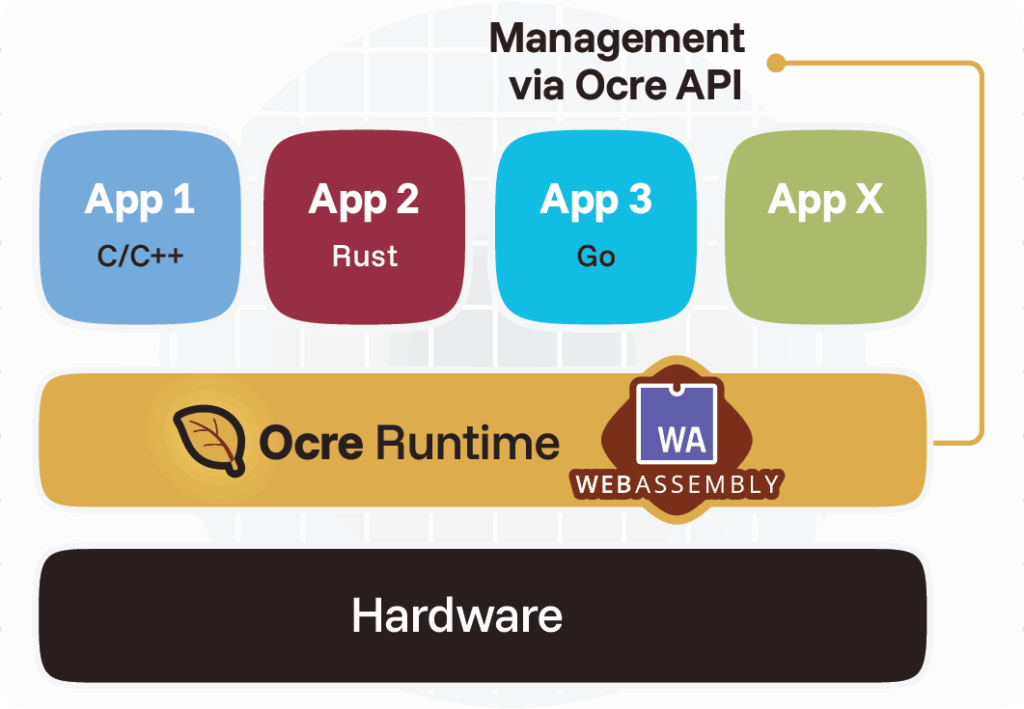
Ocre enables multi-language app containerization on resource-constrained hardware
Atym originally prototyped Ocre on FreeRTOS prior to refactoring it to Zephyr and contributing it to LF Edge. We picked Zephyr due to the modern architecture, engaged community, and broad hardware support. While Ocre is technically agnostic to operating environment, and we’ve seen some community members experimenting with FreeRTOS and NuttX ports, Zephyr will continue to be our go-to reference RTOS for the project. After all, many developers and organizations are picking it for good reason!
Over the past year, the Ocre community has received numerous requests to address a gap in the edge continuum for what we call “tweener” devices that can run Linux but don’t have enough resources to effectively support traditional container technologies like Docker. In response to this, Atym has recently seeded the Ocre project with a Linux-based version of the runtime.
Together with the original Zephyr-based runtime, developers can now deploy and manage the same code and container binaries on MCU-devices with as little as 256KB of memory and CPU-based hardware. For the latter, we’re talking just 700KB on top of Linux for the runtime and 2000X lower overhead for each container. It’s “Docker on a Diet”!
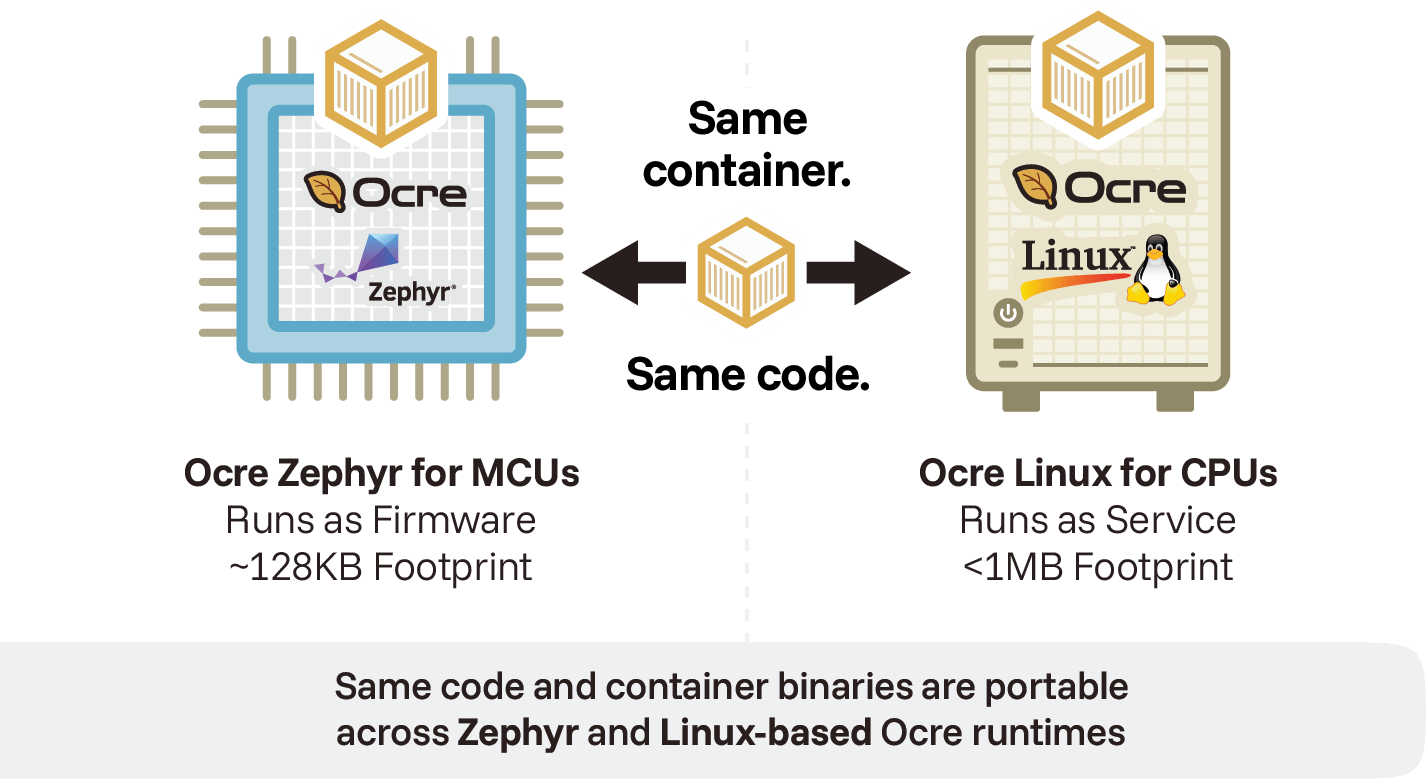
The two Ocre runtime variants and available commercial orchestration tools bring benefits that we take for granted today in the cloud. These include code reusability, portability across diverse hardware architectures, better IP protection when collaborating with partners, remote management at scale, fractional field updates, improved security and compliance, and more.
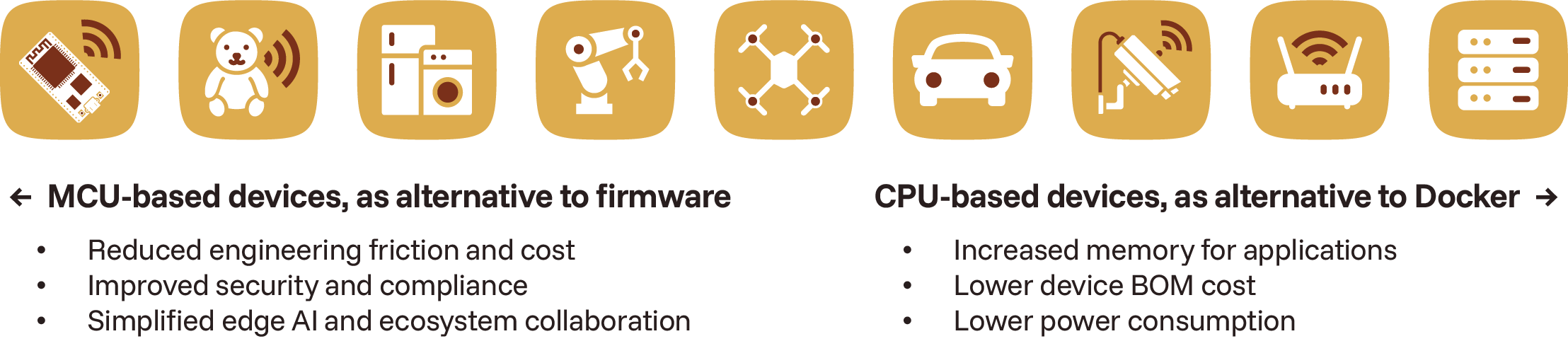
Ocre supports diverse edge hardware and use cases
When used as an alternative to traditional container technologies, the Ocre Linux runtime provides developers with a very similar experience to Docker while enabling them to deploy more functionality within the same memory footprint or decreasing their overall memory BOM cost. A common interest for this benefit is reclaiming memory space to run more sophisticated AI models.
To learn more, check out Ocre on GitHub and this video demo of the new Linux variant. And if you’re at Open Source Summit Europe in Amsterdam this week, stop on by the Wind River stand in the Zephyr area where we’re jointly showcasing Ocre!